What to tell your doctor about headaches
 Easing Team
The people who make Easing
Short answer
Tell your doctor how often you get headaches (in days per month), how long they last, where the pain is and what it feels like, what else happens with them, which medicines you take and on how many days, what seems to set them off, how they affect your life, and what has changed recently. Bring a diary of at least a few weeks: it answers most of these with numbers instead of memory.
In this post
The eight things to cover
- How often. Headache days in a typical month. Counted, not guessed.
- How long. Hours, or days. Shortest and longest.
- Where it hurts. One side or both, front, back, behind an eye. Does it move?
- What it feels like. See the words below. And how bad, 0 to 10.
- What else happens. Feeling or being sick, light or noise bothering you, visual changes before or during (aura), dizziness.
- Medicines. Every one you take for it, the dose, how many days a month, and whether it helps. Include anything bought over the counter.
- Possible triggers. Sleep, missed meals, alcohol, your period, stress. Say "possible": a diary shows what came before, not what caused it.
- The effect, and what's new. Days of work or school missed, plans cancelled. And anything that has changed: more often, worse, different.
Words for the pain
| Word | What people usually mean |
|---|---|
| Throbbing or pulsing | Beats in time with your heart |
| Pressing or tight | Like a band or a weight on the head |
| Stabbing | Short, sharp jabs |
| Dull | Constant, in the background |
| Worse with movement | Stairs, bending or walking makes it worse |
Use your own words if none fit. Your doctor needs the description, not the right term.
What to bring
- A headache diary for at least a few weeks. The National Migraine Centre asks for a month of every headache; our printable diary has the same columns.
- The boxes or a list of every medicine you've tried, and what happened.
- Your three questions, written down.
Questions you might ask
- What kind of headache do you think this is?
- Am I taking painkillers on too many days?
- What should I try next, and how will we know if it works?
- What should make me come back sooner?
When not to wait for an appointment
The NHS says to call 999 for a headache that came on suddenly and is extremely painful, or with problems speaking or remembering, loss of vision, drowsiness or confusion, or a seizure. It says to get an urgent GP appointment or contact NHS 111 if a migraine has lasted longer than 72 hours or aura lasts longer than an hour. Outside the UK, use your local emergency and urgent care numbers.
Where Easing fits
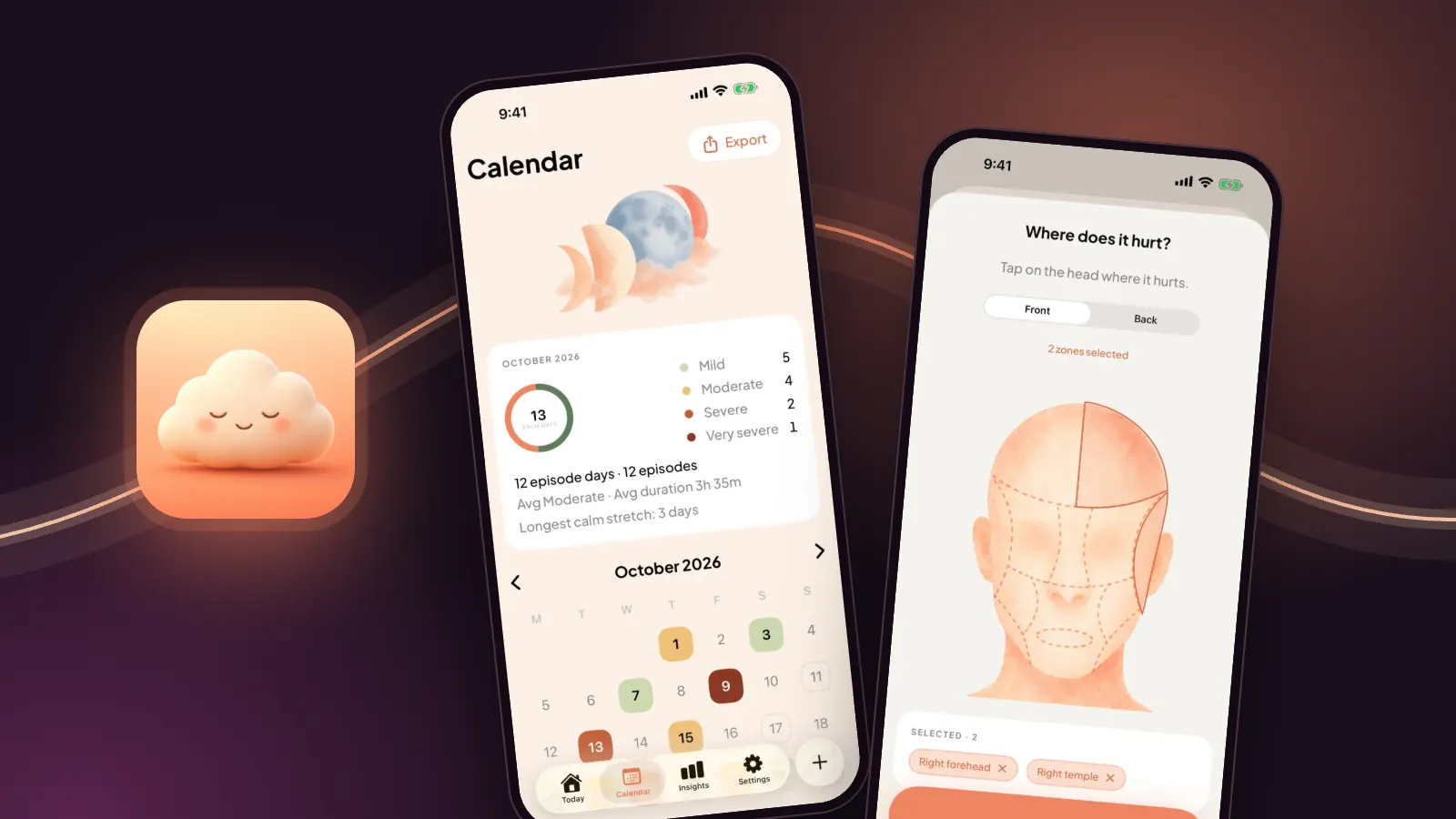
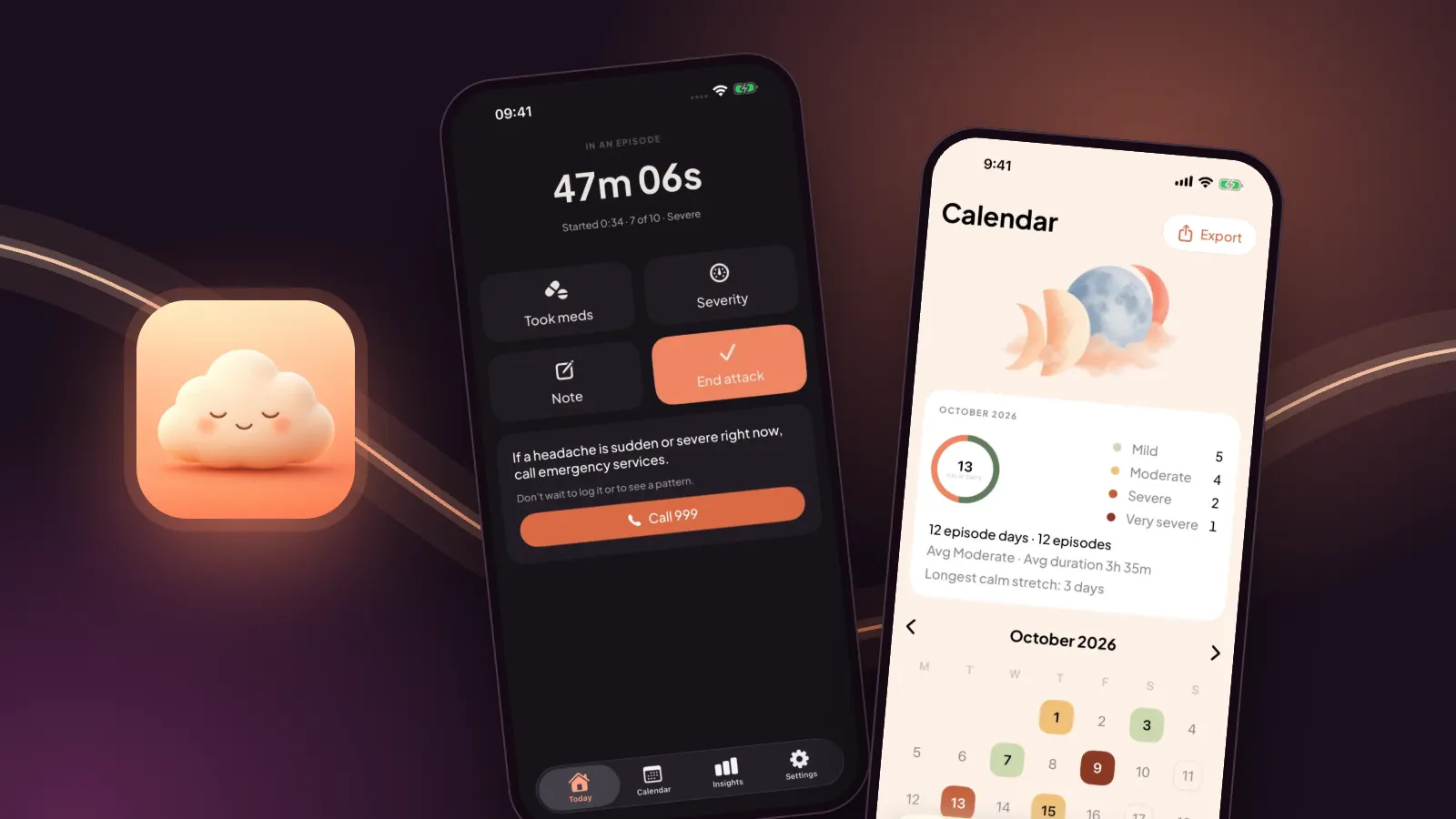
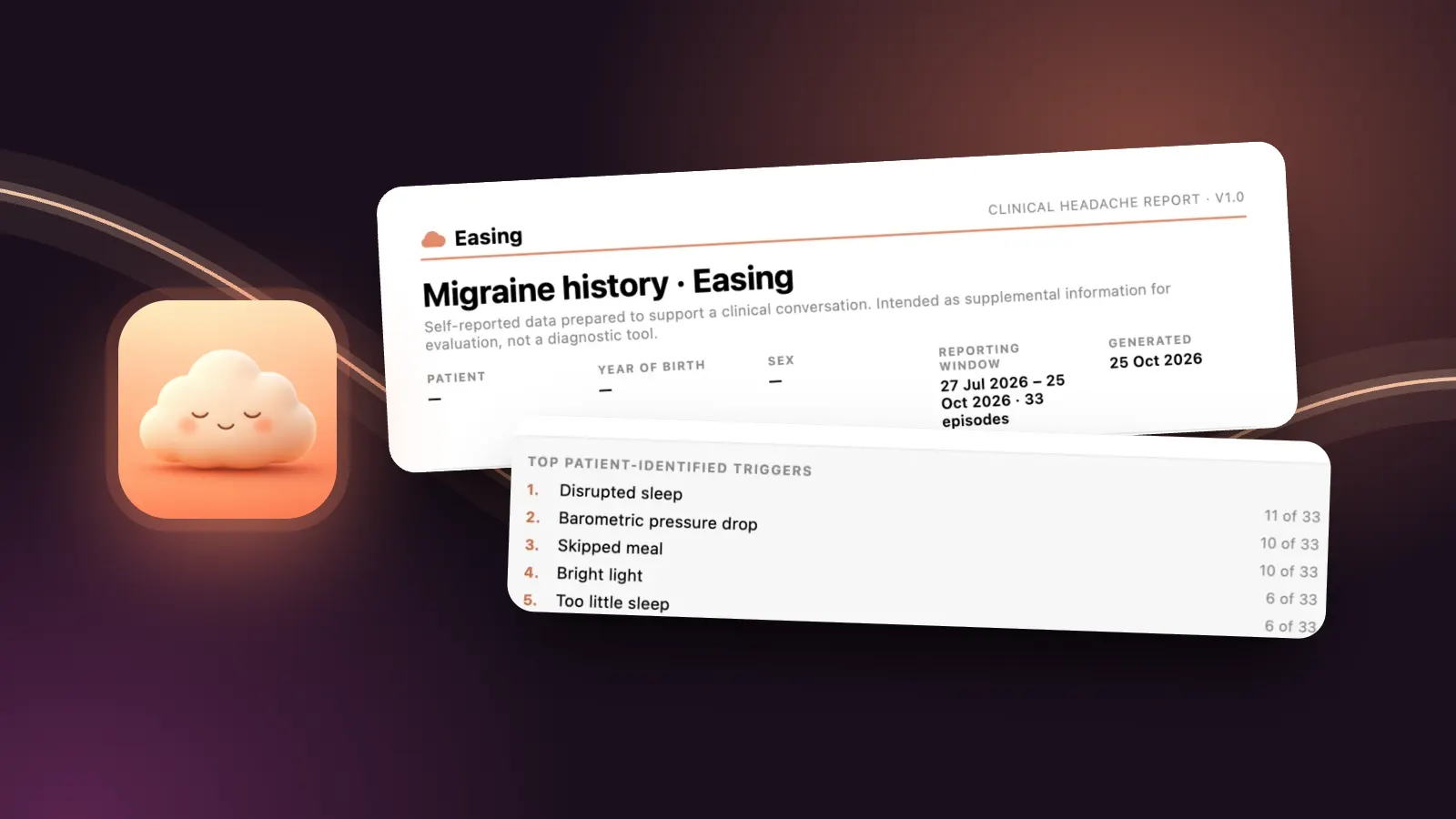
We make Easing, a headache diary for iPhone, coming soon to the App Store. It records the things on this list as you go and makes a PDF to hand over. It doesn't diagnose; that's your doctor's job.
Questions people ask
How do I describe a headache to a doctor?
Say how many days a month you get them, how long they last, where the pain is, what it feels like (throbbing, pressing, stabbing, dull), how bad from 0 to 10, other symptoms, what medicines you take and on how many days, and how it affects your life.
What should I bring to a migraine appointment?
A headache diary covering at least a few weeks, a list of every medicine you have tried and whether it helped, and your questions written down.
When should I see a doctor about headaches?
The NHS says to see a GP if migraine attacks are severe or getting worse, happen more than once a week, are hard to control, or regularly come with your period. For a sudden, extremely painful headache, call 999.
Sources: NHS: migraine; National Migraine Centre: headache diary. Both checked 29 October 2026.