How to keep a headache diary
 Easing Team
The people who make Easing
Short answer
Write down every headache as soon as you can: when it started and ended, a pain score from 0 to 10, where it hurt, other symptoms, every medicine with the dose and time, and anything you think might be related. Put a 0 on the days without one. Keep it for a month, then take it to your GP. That's the format the National Migraine Centre asks for.
In this post
What to write for each headache
- Date, day and start time. And when it ended, even roughly.
- Pain score. 0 is no pain, 10 is the worst you can imagine. Use the same scale every time.
- Where it hurt. One side or both, forehead, temples, the back of the head.
- Other symptoms. Feeling or being sick, light or sound bothering you, aura.
- Every medicine, the dose and the time. Write a second dose down again.
- Your period, if that's relevant to you.
- Anything that might be related. A short night, a missed meal, a long day at a screen. You don't need to be sure.
- The effect on your day. Missed work or school, had to lie down.
A headache diary example
One made-up entry, to show the level of detail. Short is fine, as long as you write it every time.
| Date | Started, ended | Pain | Symptoms | Medicine | Notes |
|---|---|---|---|---|---|
| Tue 14 | 07:30 to about 15:00 | 7 | Sick, light hurt | Ibuprofen 400 mg, 07:45 | Slept 5 hours. Period day 2. Left work early. |
| Wed 15 | None | 0 | None | None | None |
What the NHS says about a headache diary
The NHS doesn't publish its own diary form on its headache or migraine pages. It recommends keeping one and points to The Migraine Trust for what to record:
- The NHS headaches page says keeping a headache diary might help you work out what triggers your headaches.
- The NHS migraine page says it can help to keep a migraine diary.
- The migraine page says to see a GP if your attacks are severe or getting worse, happen more than once a week, or regularly come before or during your period.
Looking for a "headache diary NHS PDF"? If your GP or clinic gave you a form, use that. Otherwise The Migraine Trust and the National Migraine Centre both offer templates, and ours is a free printable headache diary with the same columns.
How long to keep a headache diary
A month at least. The National Migraine Centre asks for every migraine or other headache for a month, or as long as you can before your appointment. Your doctor may ask for longer. One month gives roughly four weekends, a full cycle if you have periods, and enough calm days to compare with the bad ones.
Tips that keep it going
- Write it close to the time. By the next day the start time is a guess.
- Keep it short. The Migraine Trust suggests recording basic information. A short entry you keep beats a long one you give up on.
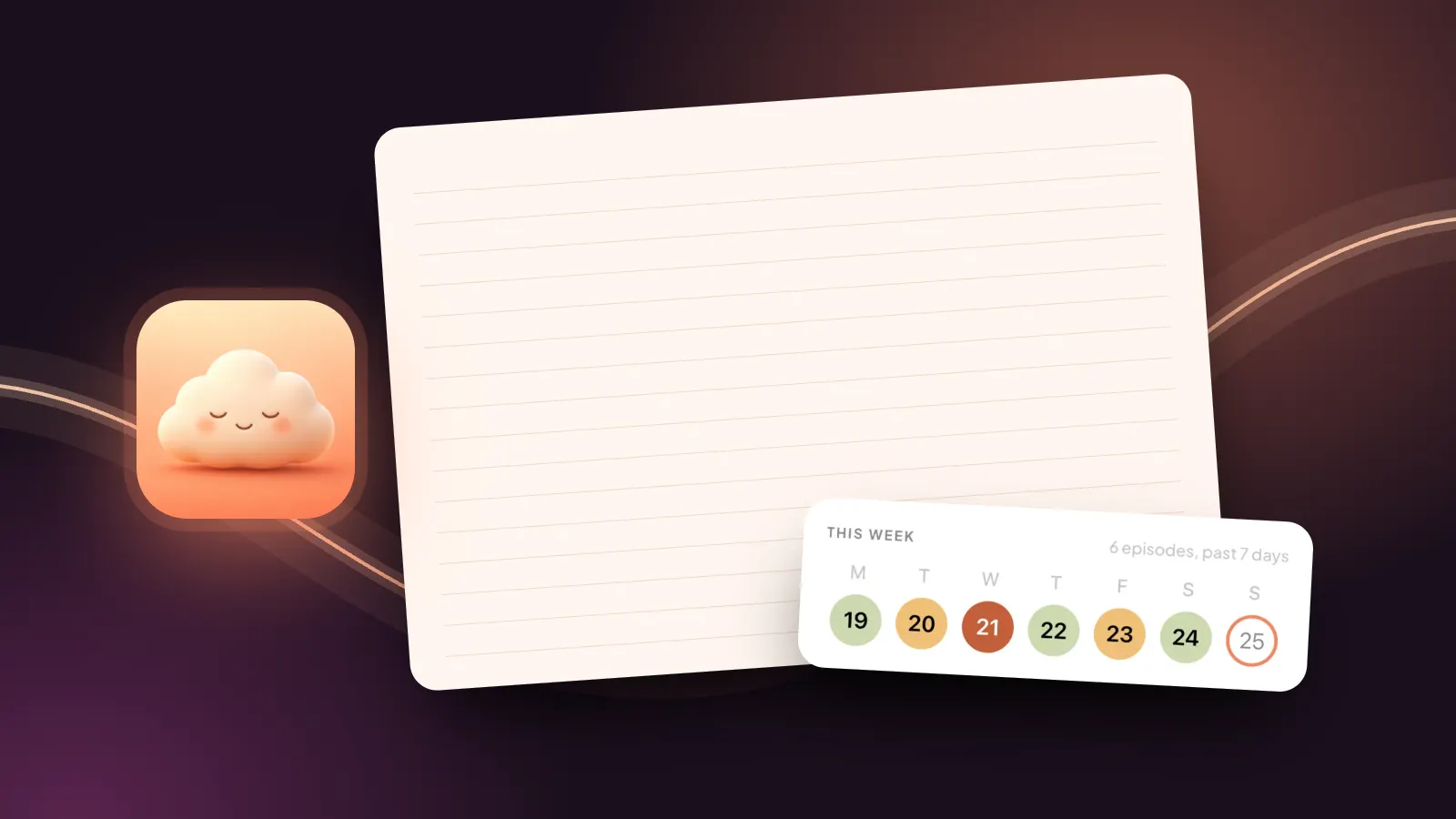
- Mark the clear days. A diary of only bad days hides how often they happen.
- Keep it where you'll see it. By the bed, in your bag, or on your phone.
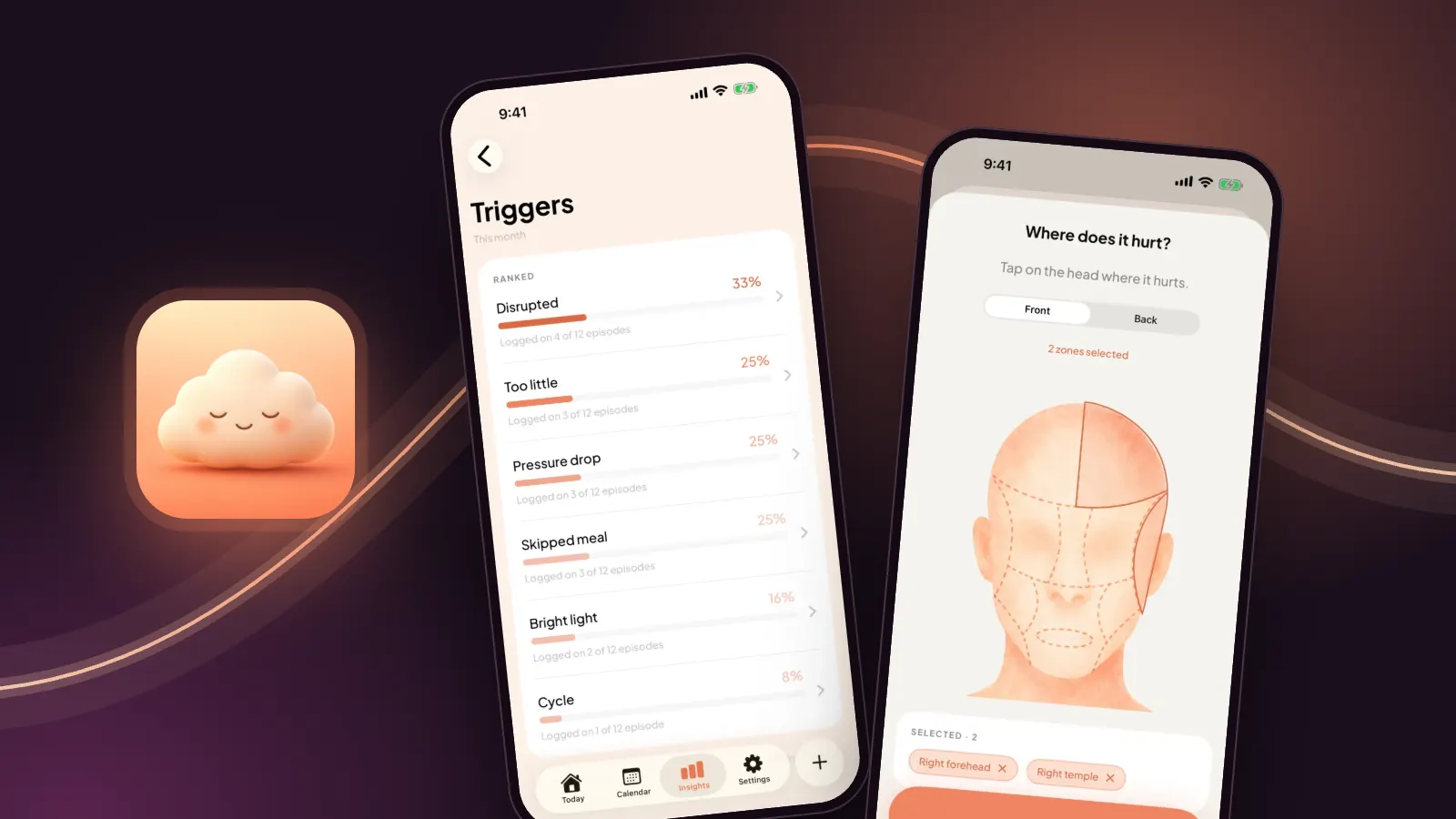
Want to look at possible triggers too? Read how to track migraine triggers.
Taking it to your doctor
Bring the diary, or send it ahead if your clinic asks. The Migraine Trust says a diary gives your doctor a clearer picture, including whether your medication is working. A month of how often, how bad and how much medicine gives them something solid to go on. Let them decide what it means.
Paper or app
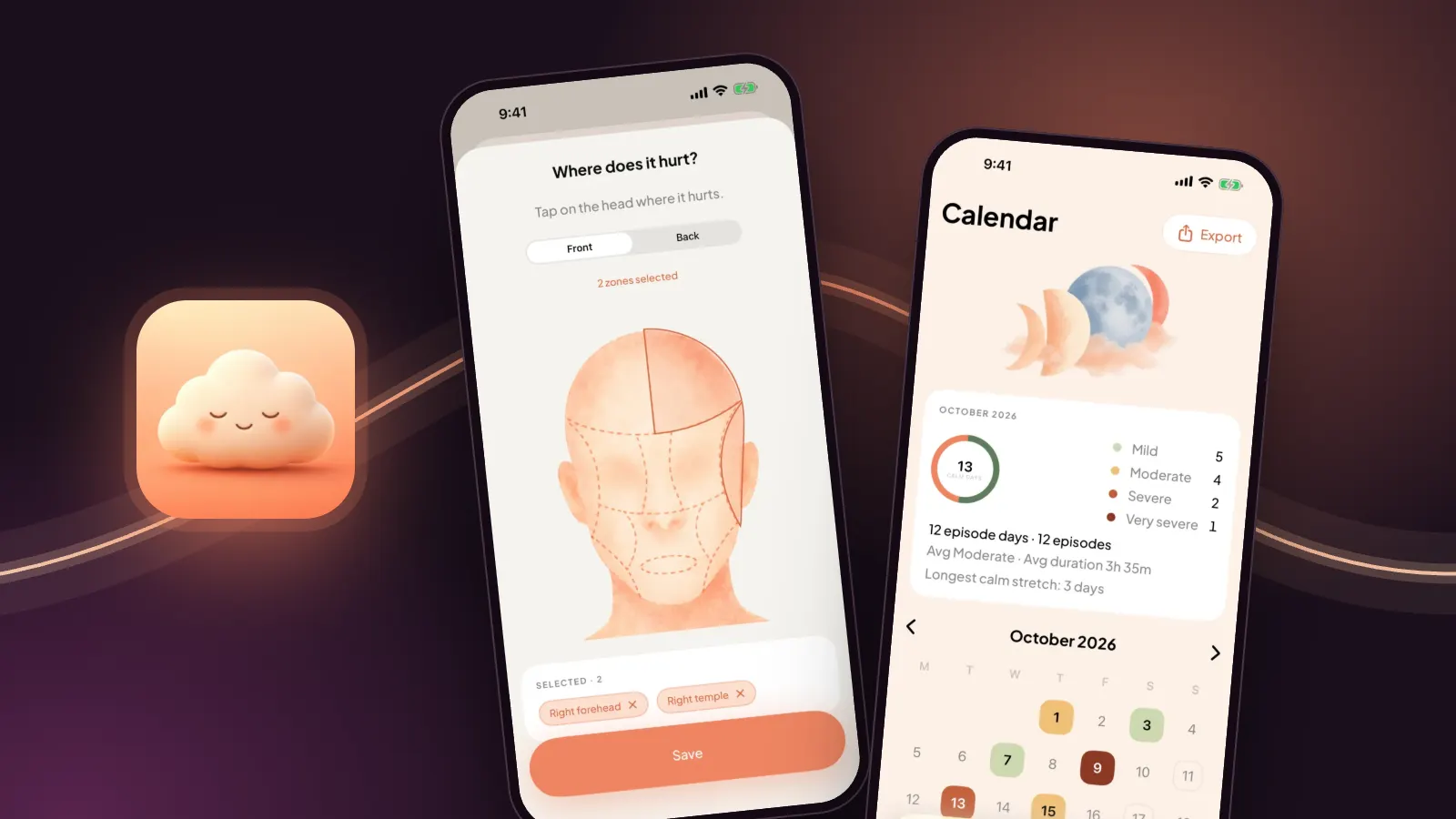
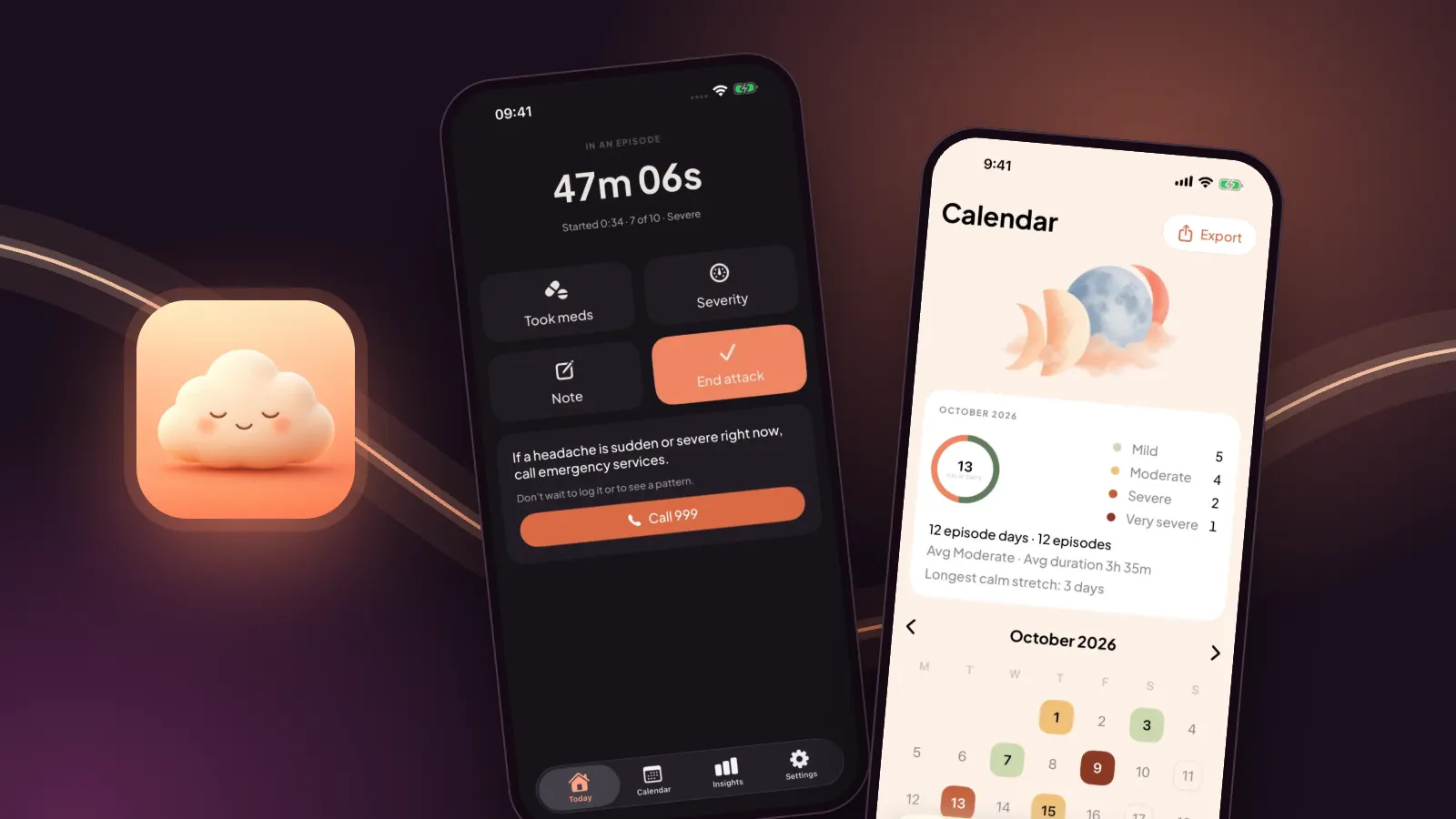
Use whichever you'll keep up. Paper needs nothing but a pen. An app can time each headache, count your medicine days and make the PDF for you. Easing, our diary for iPhone, does that, and it's coming soon to the App Store.

Questions people ask
How long should I keep a headache diary?
The National Migraine Centre asks for every migraine or other headache for a month, or as long as you can before your appointment. Your doctor may ask for longer.
What should I write in a migraine diary?
The date and day, when it started and ended, a pain score from 0 to 10, other symptoms, every medicine with the dose and time, your period if relevant, and anything you think might be related.
Is there an NHS headache diary?
The NHS headache and migraine pages recommend a diary and point to The Migraine Trust for what to record. The Migraine Trust and the National Migraine Centre both offer templates. If your clinic gave you a form, use theirs.
Should I record days without a headache?
Yes. A diary of only the bad days makes it hard to see how often headaches happen. Write a 0 on clear days.
Can a headache diary show what causes my headaches?
Not on its own. It's a record of what happened. Your doctor can help you make sense of it.
Sources: NHS: headaches; NHS: migraine; The Migraine Trust: keeping a headache diary; National Migraine Centre: headache diary. All checked 29 October 2026.