How to track migraine triggers
 Easing Team
The people who make Easing
Short answer
Pick 5 to 8 possible factors, such as sleep, meals, caffeine, alcohol, stress, your period and the weather, and note them every day, on good days too. Keep going for at least a month, then go through it with your doctor. A trigger diary shows what came before your attacks. It can't prove what caused them, and The Migraine Trust says many people have no obvious trigger at all.
In this post
This post is about triggers. For the basics, like times, pain score and medicine, read how to keep a headache diary.
Three things to know before you start
- Many people have no obvious trigger. The Migraine Trust says so plainly. The diary is still useful for how often and how bad.
- It's usually a mix. The Migraine Trust says a combination of several things is more likely to lead to an attack than one thing.
- Some "triggers" are early symptoms. What looks like a trigger may be the start of the attack. Craving chocolate is its example. The NHS says early symptoms, such as feeling very tired, can start hours or up to 2 days before the head pain.
Common migraine triggers
The NHS migraine page says some people find certain triggers can cause migraine attacks, such as:
- having your period
- anxiety and depression
- stress and tiredness
- skipping meals or not eating regularly
- too much caffeine
- not getting enough regular exercise
The Migraine Trust's triggers page also covers hormones, lack of sleep, alcohol, specific foods, dehydration, weather changes, light, noise and smells, using a computer, and exercise. These are things people commonly report, not a checklist of what affects you.
How to track them, step by step
- Pick a short list. 5 to 8 factors you want to watch. A short list filled in daily beats a long one you abandon.
- Log every day, not only attack days. A bad night before an attack means little if most of your nights are bad. You need the clear days to compare.
- Use the same words and scales. "Slept under 6 hours" compares. "Slept badly" one day and "tired" the next doesn't.
- Note the timing. The evening before an attack is different from the week before.
- Write early symptoms separately. Yawning, cravings, a stiff neck. That helps your doctor tell them apart from triggers.
- Keep the basics. Start time, how long it lasted, pain score, symptoms and every medicine with the dose.
- Review it with your doctor. Let them help you decide what, if anything, to change.
A migraine trigger tracker on paper
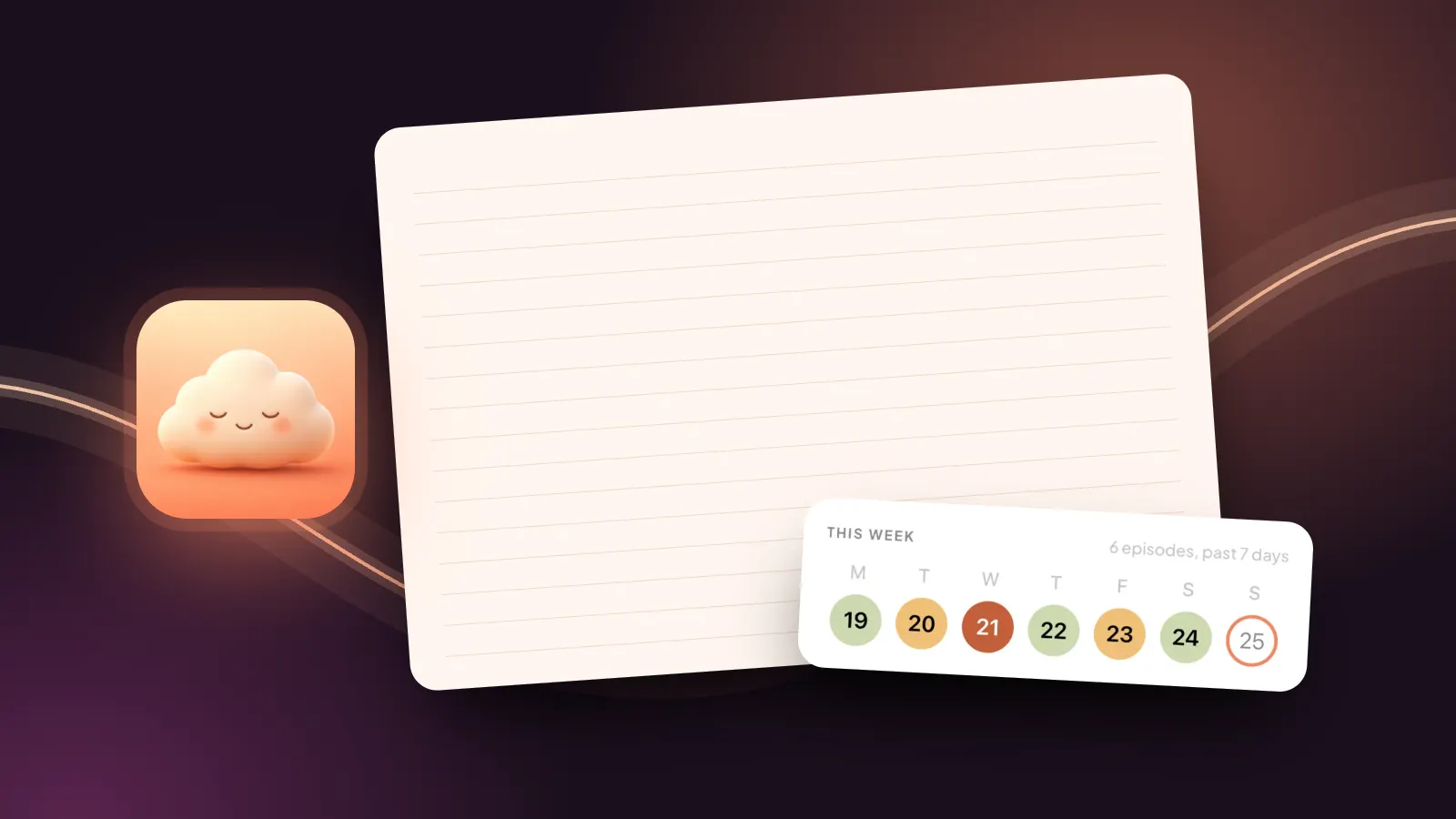
Our printable headache diary has a "possible triggers and notes" column next to the basics. Write your short list at the top of the sheet so you use the same words every day.
Migraine trigger tracker apps
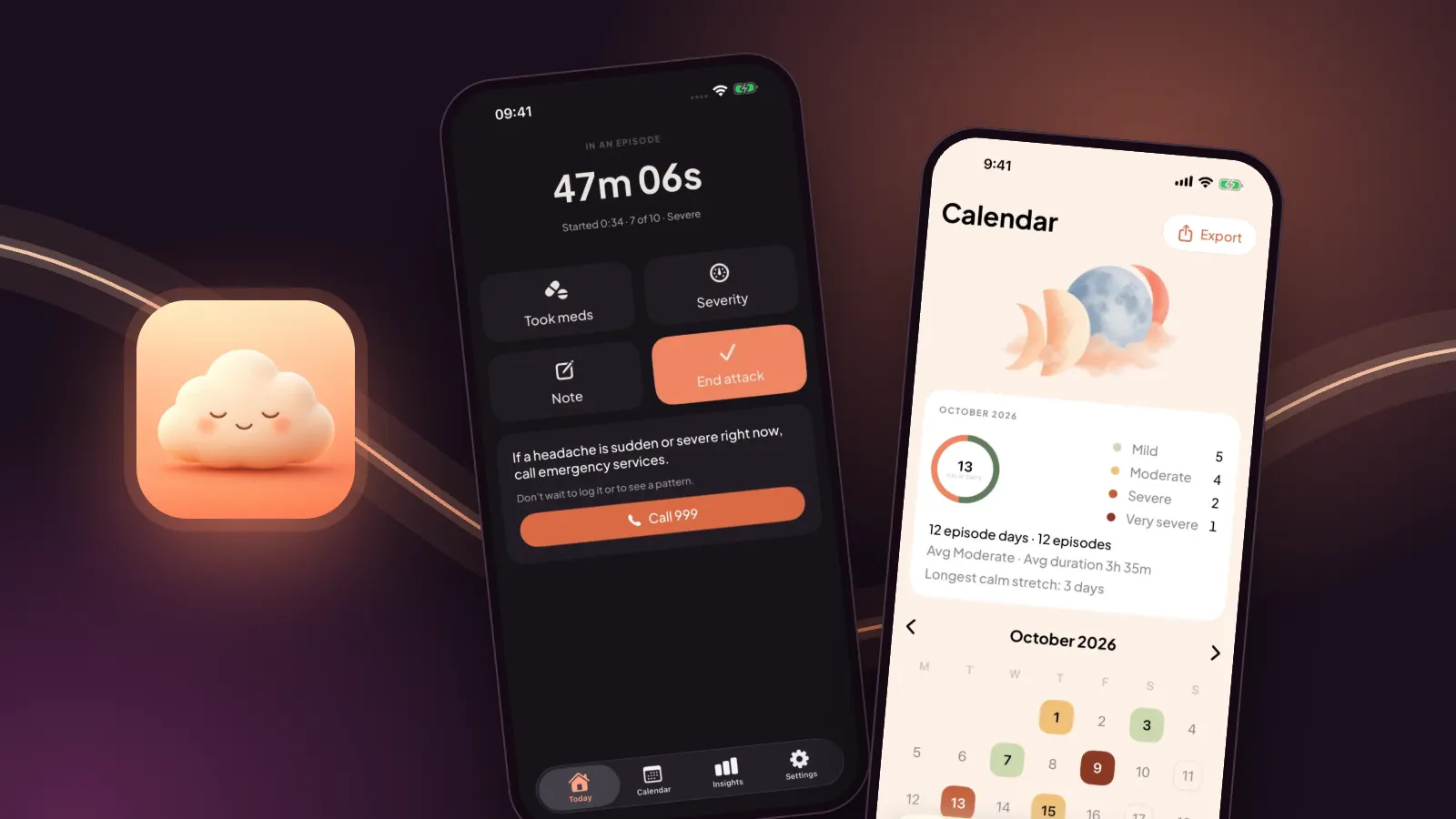
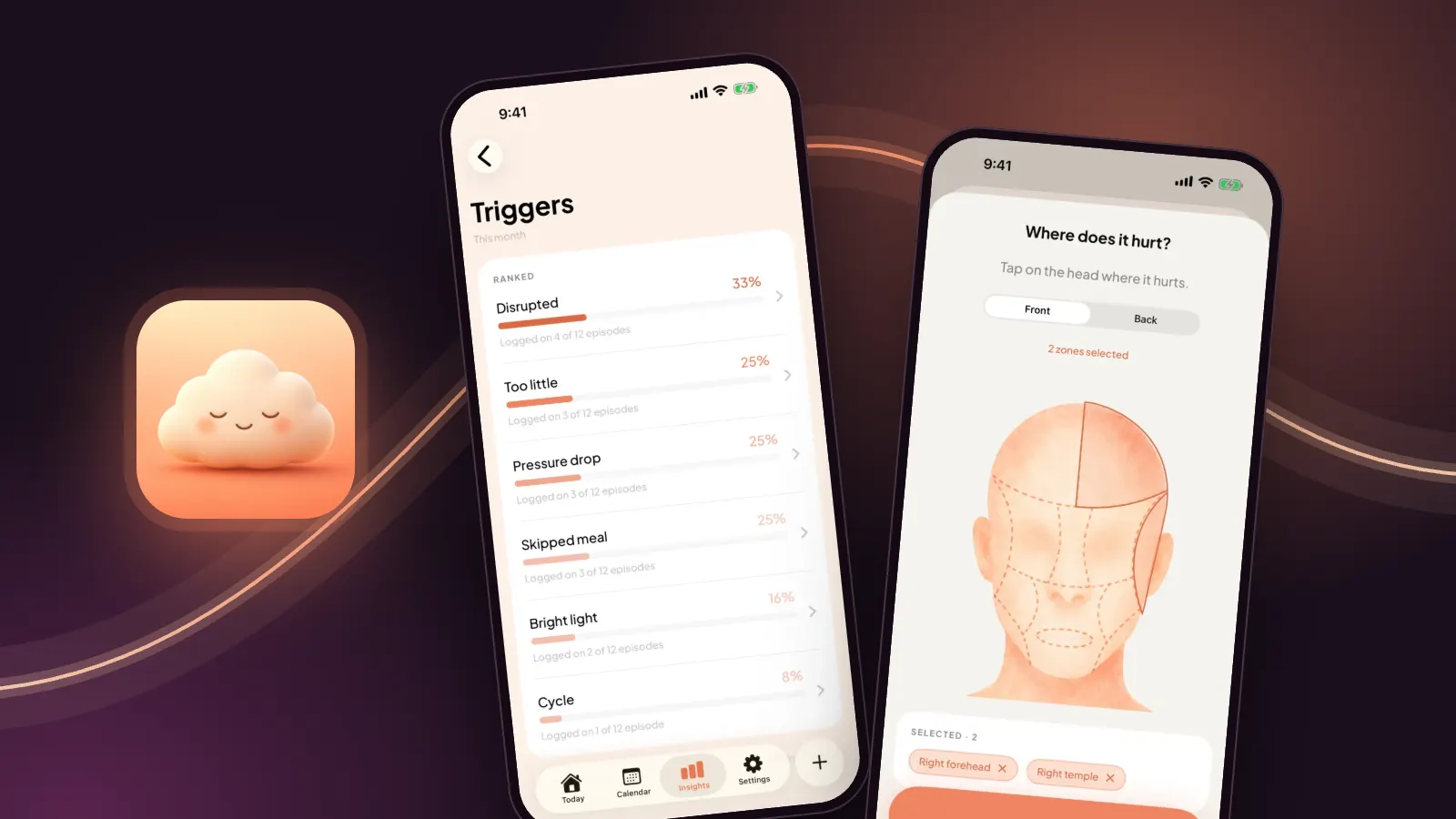
An app can do the counting. Easing, ours, lets you tag possible triggers on each episode. If you allow it, it reads sleep and cycle data from Apple Health and saves the local weather with each episode. After five episodes, Insights shows the tags you used most and lines your logs up next to pressure changes, sleep, humidity and your cycle. It's coming soon to the App Store.

That ranking is a count of what you logged, not a finding about what causes your migraines. Other apps go further with their own analysis. Migra lists trigger tracking with correlation analysis, and N1-Headache lists "Trigger Maps" after 90 days of daily tracking. We compare them in migraine tracker apps.
What a diary can and can't tell you
A diary can show that something often came before your attacks: say, that most of them followed a short night. That's worth talking about. It doesn't show the short night caused them. Both might have another reason, it might be chance, or the poor sleep might be an early sign of the attack itself.
The Migraine Trust also says focusing too much on avoiding triggers can cause more harm than good, and that there is a lack of evidence to support food triggers for migraine. So don't cut out foods or rebuild your life on a few weeks of notes. Talk to your doctor first.
Questions people ask
How do I find my migraine triggers?
Note the same short list of possible factors every day, on good days and bad, for at least a month. Then go through it with your doctor. A diary shows what often came before your attacks, which isn't proof of a cause, and many people have no obvious trigger.
How long does it take to spot a pattern?
There's no fixed time. The National Migraine Centre asks for at least a month of diary before an appointment. The more attacks and calm days you record, the more there is to look at.
What if I can't find any triggers?
That's common. The Migraine Trust says many people don't have any obvious triggers. Your diary is still useful to your doctor for how often attacks happen, how bad they are and how much medicine you take.
Should I cut out foods I think are triggers?
Talk to your doctor first. The Migraine Trust says there is a lack of evidence to support food triggers for migraine, and that focusing too much on avoiding triggers can cause more harm than good.
Can a migraine trigger tracker app work out my triggers?
An app can count what you logged and show what often came before attacks. That isn't proof of a cause. Easing doesn't diagnose anything or tell you what causes your migraines.
Sources: NHS: migraine; The Migraine Trust: migraine attack triggers; National Migraine Centre: headache diary; UK App Store listings for Migra and N1-Headache. All checked 29 October 2026.